
Empowered Learner Conference 2027: Diving Into Dyslexia
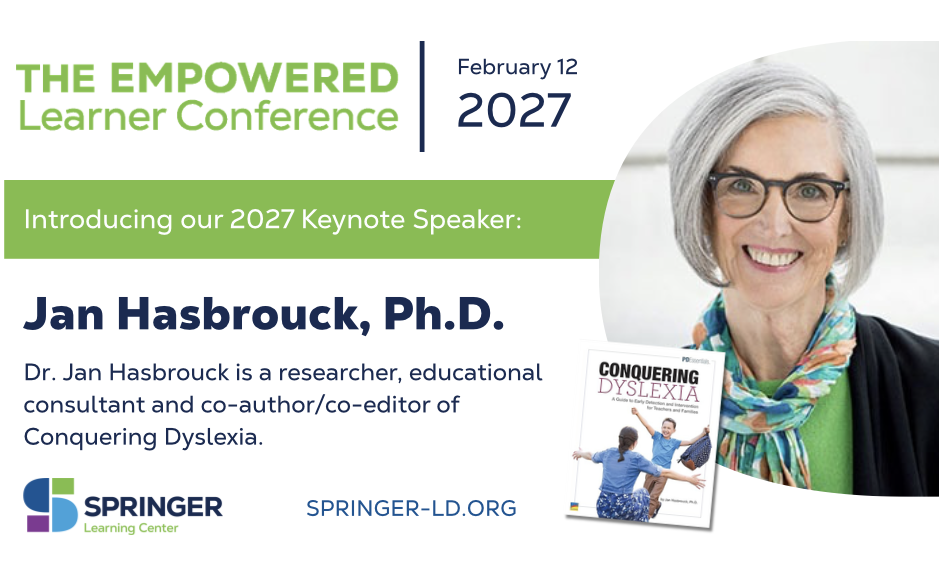
On February 12, 2027, Springer School and Center will host the 3rd annual Empowered Learner Conference: Diving Into Dyslexia. We are excited to welcome keynote speaker Dr. Jan Hasbrouck, a researcher, educational consultant, and co-author/co-editor of Conquering Dyslexia.
Our 2027 Call for Proposals is now live! If you are interested in presenting at the 2027 Empowered Learner Conference, please fill out and submit this form by October 26. Email Jen Casey, Learning Center Director, at with any questions.
Click here to view breakout sessions from last year's Empowered Learner Conference: The Power of Executive Function.
Empowered Learner Night with Dr. Jan Hasbrouck
On Thursday, February 11, Springer Learning Center is proud to welcome Dr. Jan Hasbrouck for Empowered Learner Night! Dr. Hasbrouck will present My Journey with Dyslexia as a Parent and a Researcher: Sharing the Good News!
Dyslexia is widely recognized as a challenging disorder that affects not only the child but the entire family. Many of us who have experienced the challenge of parenting or caregiving for a child with dyslexia share similar stories. In this presentation, Jan Hasbrouck will share her personal story of raising a child with dyslexia as well as her work in this area as a reading specialist and a researcher. The focus will be on the good news: The positive impact of early identification, on-going support, and targeted interventions, based on current evidence from high-quality research.
Last year's conference brought together more than 300 educators and experts to explore how best to support students with executive functioning challenges.
With two incredible keynote speakers and more than 20 breakout sessions led by professionals from throughout the region, the day is filled with valuable insights and practical strategies.

© All content copyright 2026 Springer School and Center | Privacy Notice